Wednesday, 2 November 2016

Dealing with Depression after a Heart Attack is crucial - Says the Cardiologists in Orange County

Modern research shows a physiological connection between heart health and mental health. According to the cardiologists and researchers stress and anxiety can typically elevate the stress hormones and thus can impact your heart rate and blood pressure. Talk to the cardiologists for complete heart health and to deal with your depression after a heart attack.

Yes, depression, anxiety, stress and coronary heart disease (CHD) are common conditions and often occur together.

In fact for years researchers and doctors thought that the link between heart health and mental health was purely behavioral. However that thinking has started to change. Modern research shows a physiological connection between heart health and mental health. Simply put; the chemical and the biological factors that trigger the psychological issues also have an enormous influence on heart health.

The Link between Stress and Heart Health

Now there are evidences to show that as high blood pressure, high cholesterol levels and smoking, depression can also be a risk factor for heart diseases. In fact stress, anxiety and depression can affect the recovery of people after a heart attack and thus increase their risk of future heart attacks and further heart problems.

Although research does not firmly link stress and heart health however the growing belief is that - stress, depression, anxiety are the additional risk factors  and are even more dangerous than the established risk factors.

According to the cardiologists and researchers stress and anxiety can typically elevate the hormones such as cortisol and adrenaline and thus can impact your heart rate and blood pressure

Depression after a heart attack is common

Statistical data shows

  • ·        15% of heart attack survivors become seriously depressed in the first few weeks
  • ·        Another 25% experience milder levels of anxiety and depressive symptoms
  • ·        4 in 10 patients do experience quite severe emotional responses

(Data Source: bhf.org.uk)

Emotional disorder is common after an attack. Like any other brush with death, heart attack can unleash intense negative emotion. Survivors often feel stressed, depressed, confused and nervous. Unfortunately many slip into the abyss of depression. You may go through a range of negative emotions such as depression, fear, anger and loneliness.

Although feeling bleak may seem natural after an attack however depression is something which should not be taken lightly. When left untreated depression can simply hasten death

How common is depression after a coronary attack?

The answer is simple - Very common.

  • ·        20% of all heart attack survivors suffer from major depression
  • ·        Another 20% suffer from mild to moderate depression
  • ·        Every 1 out of 3 long-term heart attack survivors slip into chronic depression

How dangerous is depression for heart health?

For heart patients depression can be deadly. Statistical data reveals shocking facts –

  • ·        Majorly depressed heart patients are more likely to die within 6  months of a heart attack
  • ·        Depressed heart patients are more likely to suffer future heart attacks

Still the question remains unanswered – why depression and heart disease is such a dangerous cocktail?

Well; the answer to the question however lies in the body's own natural reaction to anxiety and stress. Depression can trigger the release of stress hormones. These hormones in turn increase the heart rate, increase the blood pressure and thus disrupt the heart rhythm and damage the heart muscle. Research has also revealed that these hormones can also expedite the process of building up fatty plaques in the arteries, thus setting the perfect stage for future attacks.

Depression also sap the survivor’s will to live and to fight heart disease. A study reported in the “Archives of Internal Medicine” revealed –

A depressed heart patient is more reluctant to give up smoking, drinking and eating a low fat diet and in following doctor’s advice than a non depressed heart patient.

How can you actually protect yourself from depression?

You should know the signs and symptoms of depression to best protect yourself and your loved one from it.

National Institute of Mental Health says that it can be called depression if a person has at least any 5 signs from the following signs and symptoms for 2 weeks.

  • ·        Frequently feeling sad and empty
  • ·        Loss of interest in all activities
  • ·        Unhealthy eating and sleeping patterns
  • ·        Unnecessary crying
  • ·        Thoughts of death
  • ·        Fatigue
  • ·        Difficulty in concentrating
  • ·        Difficulty in remembering
  • ·        Feeling helpless
  • ·        Feeling worthless
  • ·        Irritability
  • ·        Unexplained pains and aches

Seek help right away if you think you or your loved one is suffering from depression after a heart attack.

Talk to the cardiologists in Orange County for complete heart health and to deal with your depression after a heart attack. You may even join a support group for heart attack survivors to talk with people and help each other.

Play your part well to fight with stress and depression. Daily walks are certainly a good exercise to start with. Walking is always enjoyable and it may improve your mood, increase your energy level and give you some strength to fight with your heart disease.

Tuesday, 4 October 2016

Shortness of Breath Symptoms and Treatment in Huntington Beach

It is common to experience shortness of breath when you exert to an extent. However it is also important to mention here, if you frequently suffer from short of breath then it is significant to talk to a doctor and seek medical attention. Let us take a look at the basic first aid for shortness of Breath Treatment.

Breathlessness, difficulty in breathing or more precisely shortness of breath is certainly an uncomfortable sensation. ‘Dysponea’ as it has been medically termed; breathlessness is undeniably a medical concern. Victim may feel winded or feel puffed and in certain cases breathing may even hurt.

Yes, it is common to experience shortness of breath when you exert to an extent. However it is also important to mention here, if you frequently suffer from breathlessness then it is significant to talk to a doctor and seek medical attention. Yes, frequent breathlessness may have some unidentified underlying serious medical conditions.

Before delving any further about the causes of breathing difficulty, let us understand breathlessness in detail

What’s ‘shortness of breath’ anyway?

Medically speaking; this is a particular condition when you may find it difficult to breathe. It may happen suddenly or even can develop slowly over the time. The scientific reason for shortness of breath is simple – your body needs some more amount of oxygen and that’s why you are compelled to breathe faster.

Who can experience shortness of breath or breathlessness?


Sudden breathlessness is one of the leading causes of rushing to the emergency room. It is however common to feel short of breath when exercising or exerted.  However serious and severe breathlessness, which occurs suddenly is a medical concern and in most of the cases stand as a staggering symptom of heart and lung diseases.

What are the causes of breathlessness?

Short term, acute and severe breathlessness may occur if you are suffering from asthma, pneumonia or suffering from COPD medically known as “Chronic obstructive pulmonary disease”.  Also, certain heart diseases or clot in the lung, acute anxiety and even anemia may often cause breathlessness.

Let us now take a look at the basic first aid for shortness of Breath Treatment in Huntington Beach

There is no one size all approach when it comes to the point of treating breathlessness. This is because treatment mostly depends on the cause of the discomfort. Although some cases can be managed by the General Physicians however it is always recommended to visit a cardiologist if you experience breathlessness frequently.

First – Aid Steps for treating breathlessness

As already briefed patients need to visit a cardiologist or a lung specialist (depending on the cause of breathlessness) however there are certain first aid steps, which you can follow for treating breathlessness in certain emergency situation, until you are able to admit the patient to the hospital.

Let the patient rest: Yes, you should do your level best to let the victim rest. The logic is simple here, more the victim exerts, more oxygen he use and as an obvious next result more breathless he may feel. Think once, what happens when you exercise hard at the gym? Simple, you feel breathless. Same is the case of the victim as well. Let the victim rest for some time and in the mean time keep a close eye at his breathing pattern.

Let the patient lay, stand or sit comfortably: In fact a lot of myths still shroud about how to position the patient who is suffering from breathlessness. Players are often recommended to hold arms above their head for maximum air inflow. On the other hand, paramedics often recommend “tripod position" for victims. However we never get tired of saying, each case and every patient is different. So, it is always recommended to let the patient decide his own comfortable body position.

Dial 911: When resting, sitting or lying in comfortable body position is not serving the purpose, do not delay any further and call 911. As we have already said breathlessness may have many underlying causes. In some cases, severe lung issues, heart attack or other life threatening issues may even cause breathlessness. Use your best judgments and call 911, which can strike the difference between life and death

For victims with some chronic lung problem, use oxygen: Check whether or not the parent has oxygen available. During the episodes of breathlessness the patient should use oxygen. Calm him down and assure the patient that in the period of acute breathlessness, oxygen is required and he need not to worry about the amount he takes.

Remember; the treatment for breathlessness is case specific and should be left to the professionals.

Good Luck!

Monday, 5 September 2016

Sudden Cardiac Arrest? Consult With The Cardiologists In Orange County

People often ignore the serious symptoms and warning signs before they collapse. In fact the Cardiologists in Orange County never get tired of saying, there are a number of classic symptoms associated chest pains owing to poor blood flow to the heart.

Time to talk about something important and pertinent! Yes; we are talking about sudden cardiac arrest.

Medically it has been defined as the abrupt loss and sudden arrest in the functioning of the heart. Of course; it is a life threatening event and if left untreated it may lead to sudden cardiac death ( SCD).

People who suffer from SCD, in most of the cases have coronary artery disease however there are also a few common as well as not so common conditions that may also lead to sudden cardiac death.

Sudden cardiac death (SCD) – A closer view

Let’s understand the mechanism of sudden cardiac arrest first.  Malignant ventricular arrhythmia which is triggered by the lack of blood flow to the heart (also known as cardiac ischemia) or triggered by damaged heart muscle is the leading cause for sudden cardiac arrest in people.

Yes; SCD affects people of all ethnicities, ages and health status. Some people may experience symptoms a few weeks before to this fatal event however in most of the cases due to lack of knowledge they may not even know it.

Statistical report and a recent study reveal the fact that people often ignore the serious symptoms and warning signs before they collapse. In fact we the Cardiologists in Orange County    never get tired of saying, there are a number of classic symptoms associated chest pains owing to poor blood flow to the heart.

Here Are the 5 Classic Symptoms of Heart Attack

•    Chest pain and often acute chest pain, intense chest pressure with or without extension to jaw and left arm
•    Shortness of breath even when at rest or even with the least amount of exertion
•    Excessive amount of sweating (Medical term – Diaphoresis)
•    Unexplained tiredness and nausea
•    The feeling as if you are going to die

It is very important to recognize and address the warning signs and symptoms. All the symptoms mentioned above could signal a heart attack. You should seek immediate medical attention if in case you experience any of these symptoms. Remember; your life may actually depend on you’re the decision you take.

It is also pertinent to mention, heart attack is not always the only reason for sudden cardiac arrest.

In fact; in a recent study the researchers have evaluated the common symptoms from patients during the weeks prior their catastrophic sudden cardiac arrest. Curiously the researchers also identified the early warning symptoms, such as chest pain, shortness of breath, palpitation, feeling of losing consciousness etc.

Although these warning signs are similar to the heart attack symptoms however investigators clearly pointed out certain unique differences.

These signs are worrying in people suffering from diabetes, high blood cholesterol, high blood pressure and obesity.

Moreover; these symptoms are also especially worrisome in people who have established heart disease.

The warning signs can also be different between men and women. A recent study has clearly pointed out; men tend to have more chest pain while women tend to have lightheadedness, shortness of breath and dizziness. Although the exact reason for the difference in the signs and symptoms between men and women is still unknown but this is also one significant factor why heart attacks are often missed in women in comparison to their male counterpart.

What should you do in sudden cardiac arrest?

The symptoms and signs of heart attack should not be ignored. Medically speaking; the signs and symptoms of heart attack appear only when the blood flow in the heart is compromised. Needless to say; the signs and symptoms are therefore the strong indicators that the heart is at risk.

Severe, acute and crushing chest pain in left or center of your chest or acute shortness of breath is the sure sign to head to the emergency room. Losing consciousness unexpectedly is also quite concerning.

In these cases, dialing 9-1-1 or contacting emergency medical services (EMS) is recommended.

Keep in mind; calling EMS has a survival advantage in comparison to not calling EMS. Also; do not ignore the warning signs and do not drive yourself to the hospital.

The bottom-line – Depending on the size and severity of the heart attacks, the signs and catastrophic warning symptoms of heart attack usually vary. No matter how insignificant it may seem still the warning signs should not be ignored. The fact is undeniable – quicker the treatment is provided, better the chances of long term damage.

Monday, 1 August 2016

Heart Attack – Symptoms, Causes and How to Defeat It


Heart attack has become a common health problem across the USA. This article sheds lights to what heart-attack is along with its symptoms, causes and how to defeat this growing menace. 

What Is Heart-Attack?

You wake up in the morning and discover an indomitable pain on your chest. You may consider it as an acute indigestion problem. However, in reality, it may a grave sign of a heart related problem. It may cause a heart attack.

More than a million Americans suffer heart attacks in each year. Heart Attack or in medical terminology “Myocardial Infarction (MI)” simply means permanent damage to heart muscle. “Myo” refers to muscle and “cardial” to heart and "infarction" suggests the death of tissue in heart due to lack of blood supply.
However, before knowing what heart-attack is, you should also know how your heart functions.

How Heart Functions?


Heart is muscle. It is situated on the left of the centre in the chest and size of a clenched fist. There are four chambers in a heart – top two called atria and bottom two called ventricles. Heart pumps blood to lungs to receive oxygen and then pump it around the body. Oxygen-poor blood comes to heart through veins and arteries, enters to the right atrium and forwards to right ventricle through a one-way valve. Then it is sent to lungs for collecting oxygen. After collecting oxygen, blood returns to heart through left atrium. It then goes via another one-way valve to the left part of ventricle and then pumped around the body via aorta.

What Are The Symptoms Of Heart-Attack?

It will be really tough for an ordinary person to understand which one is heart attack and which one is not.  But you can always gauge heart attacks considering some symptoms. There are various symptoms that may constitute as heart attacks. These are:

•    Irregular pain or discomfort in the central of the chest, or stays for more than a few minutes
•    Pain or discomfort in either arm, or both arms
•    Back pain, stomach ache, discomfort in neck & jaw
•    Shortness of breathing.
•    Nausea, cold sweats or feeling light-headed.

However, it is advisable to visit a medical practitioner, if you are witnessing any of the above mentioned symptoms.

Causes of Heart-Attacks


Heart is a complex organ. This complexity can cause many problems. The below-list reveals some of the many problems that cause heart attacks.

•    Atherosclerosis (thickening of artery walls)
•    Coronary Heart Disease (plaque blocks arteries, causing blood clots)
•    Fright (heart-attacks during earthquakes)
•    Smoking (presence of toxins in cigarettes narrows the arteries)
•    Diabetes
•    Hypertension (high blood pressure)

Therefore, if you are suffering from one or more of the above health problems then you have a high risk of a heart-attack. In such case, it is better to consult with a medical practitioner.

Exercise Is the Best Way to Beat Heart Related Disease


Many cardiologists have revealed that unfitness is one of the many reasons that cause heart attacks. It is really important to maintain your fitness level to beat heart attacks. Especially, if you are in your sixties and little bit of overweight then it is always advisable to join gym.

However, it is always advisable to visit cardiologists when it comes to heart related problems. 

Monday, 4 July 2016

5 Heart Health Risk Factors Need to Watch Out In 2016

Sad but true, factors pertaining to health risk are growing. Even today’s cutting-edge technology is also not able to curve this deadly growth. In today’s time, there are more than dozens of risk factors that can cause inflammation of cardiac blood vessels, plaque formation and more. Although this note will discuss about the 5 most fatal heart health risk factors that need to look out in 2016. These risk factors are based on the history of cardiovascular risks, new research by the medical practitioners and more.

1. Smoking: Without a doubt, smoking is the top risk factor for both men and women that cause heart problems. Many of you may think that it is due to the presence of nicotine but that is not. Each puff of cigarette send up to 4,000 chemicals that include pesticides, insecticides and carbon monoxide. All of these chemicals are responsible for causing in one of the biggest risk factors for heart disease.

2. Blood Pressure: High blood pressure is the most fatal reason for causing heart diseases for women. The main reason of causing such problem is women have smaller number of blood vessels in heart compare to men. These problems make women vulnerable to high blood pressure. Women are also prone to diastolic dysfunction of the heart that results higher blood pressure in comparison with men. However, it doesn’t mean men can ignore heart related diseases. But since, anatomy of women is different from men and also uses NSAIDS than men; women are more prone towards this type of problems.

3. Acute Emotional Stress: Stress is a huge factor that causes heart health problems for both men and women. Stress is very risky for hostile and aggressive types of men and vitally exhausted types of women. Acute emotional stress also highly stressful for both men and women.

4. High Blood Sugar: High blood sugar leads to higher level of insulin. Insulin is the main culprit that causes inflammation of blood vessels. Moreover, two most important organizations that cater heart related issues in USA - American Heart Association & American College of Cardiology - have strengthened their focus on the regulation of sugar in blood.

5. Lp(a): Lp(a) are nothing but the cholesterol. More precisely, the most dangerous form of cholesterol. These are small, highly dense & very inflammatory cholesterol particle increases “stickiness” in blood, and contribute dramatically in formation of clots and chance of a heart attack.


Barring the above five, there are various other risks factors for the heart. These are small particle oxidized LDL cholesterol, high triglycerides, high homocysteine, elevated C-reactive protein and more.

Monday, 16 May 2016

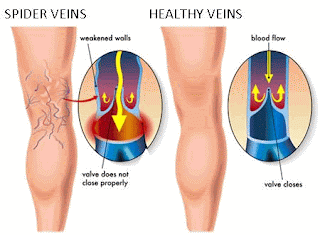
Causes and Treatment Procedures of Spider Veins

spider vein treatment Huntington Beach

Spider veins are a very common problem suffered by people since a long time. There are various causes of the appearance of spider veins, though these are mostly harmless but it can become more prevalent with age if not treated in time and cause some severe problems. It usually affects women more than men and mostly can be seen on legs and other specific areas as well. It can be easily treated with the treatments mentioned below.

There are several ways available today to get rid of spider veins. Spider veins are thin red colored lines of blood vessels can be found on legs & feet. Usually, harmless, but sometimes these veins can cause aching or burning or even pain, especially if a person is standing for a considerable long period of time. There are multiple reasons that cause spider vein. The most commons are:

  • Birth Control Pills.
  • Blood Clots.
  • Increased pressure in abdomen area due to constipation, presence of certain garments such as girdles and tumors.
  • Changes in hormone functionality due to problems such as menopause, puberty or even during pregnancy.
  • Obesity.
  • Trauma to the skin due to ultraviolet ray or any past surgery on veins.
  • Factory work, hairstyling, nursing – work that requires continual standing.

These types of veins can be discovered more in women than men and also among aged persons. In fact, 60% of adults have dealt with this problem at one time or another.

There is various spider vein treatment centers can be found in Huntington Beach area. These centers are capable of offering treatment based on a person’s symptoms. The two most important are:

  • Sclerotherapy: Doctor injects solution in the affected veins with scars and blocks them which cause blood to reroute to healthier veins. After that, treated spider veins seem or start to fade. However, there are instances, when affected veins had been injected for more than one time. Nonetheless, sclerotherapy is predominantly an effective treatment if done properly. The best part of this treatment is it doesn’t require any anesthesia and can also be done at your doctor’s office. Side effects of this treatment include swelling, itching, changes in skin color in treated areas.
  • Laser surgery: This surgery mainly operates by sending bursts of light (really strong in nature) into the affected veins turning them faded really slow and disappear. In this surgery, there is no need of incision or needles. However, laser surgery is often less effective compared to sclerotherapy, particularly for the larger veins. There are various side effects of this treatment - redness, itching, bruising, swelling and permanent changes in skin tone.

After treatment, in both, blood vessels take some time to fade in several months. But, they may not fade completely. Even, later, new spider veins can develop in the same area. Knowing this, doctors still choose any one of these two treatments when it’s come to spider vein.

Saturday, 30 April 2016

How to Prevent and Reverse your Heart Disease?

Today we have shifted our attention to combat an age old and the most common health problem “heart diseases” from so many toxic medications to a more natural ways of preventing or reversing its effect on us, in order to be safe from “heart attacks “and many other such serious diseases which has impacted to a large number of population of the world and is still increasing at an alarming rate.

In today’s time heart diseases have become a huge problem in our youth, the disease is being increased in a huge percentage, and instead of getting into the heart of the problem they are consuming toxic prescribed medications in a huge amount on daily basis which isn’t helping much instead of just adding more toxic into our body.

If you have some sort of heart disease but that’s not so serious to the level of any kind of surgery such as angioplasty or bypass etc it still can be eliminated just by changing your behavior that has added to your condition and opting to the more healthy habits, exercising regularly or simply by  changing your diet.

The need of the hour is to shift our attention from the regular medications to more effective and natural ways to prevent and reverse heart diseases which can be done in various ways listed below:

Consumption of omega 3 fatty acids: omega3 fatty acid can be consumed in order to reduce the risk of sudden cardiac death or any kind of heart diseases in future, it can be found in fish, walnuts, beef etc. its consumption has proven to reduce the heart diseases making it a very good source to prevent it.

Vitamin D: vitamin D has its own various benefits health wise if exposed into limitations it can be great in order to reduce any

Magnesium: magnesium plays a vital role inprotecting against any sort of heart diseases. Magnesium is one supplement that must be included in your diet it can stop aging of your heart muscle and prevent from cardiovascular diseases. Magnesium supplements can turn out to be highly effective to keep heart diseases at bay.

Pomegranate: this is one remarkable fruit to get rid of any heart diseases; it helps to lower blood pressure, fights infections, prevents cholesterol oxidation, and reduces inflammation.

Arginine: According to various researches this amino acid can prevent you with the progression of atherosclerosis and also reverse the pathologies which are associated with the process. It increases the production of nitric oxide which is generally depressed in blood vessels where the inner lining has been damaged resulting in the dysfunction.

Garlic: along with providing many other health benefits of garlic it also helps in reducing the heart diseases, it prevents from the thickness and hardness of the arteries resulting in significantly reducing any sort of risk of stroke or heart attack and other serious heart diseases.

B-Complex: vitamin B reduces the progression of building up plaque in the arteries along with it also reduces the production of homocysteine which can dangerously affect artery and other blood vessels.

There are many more proven ways of prevention and reduction of heart diseases to keep the occurrence of its major form at bay, for more information of heart related issues you can always contact Cardiologists at Orange County